
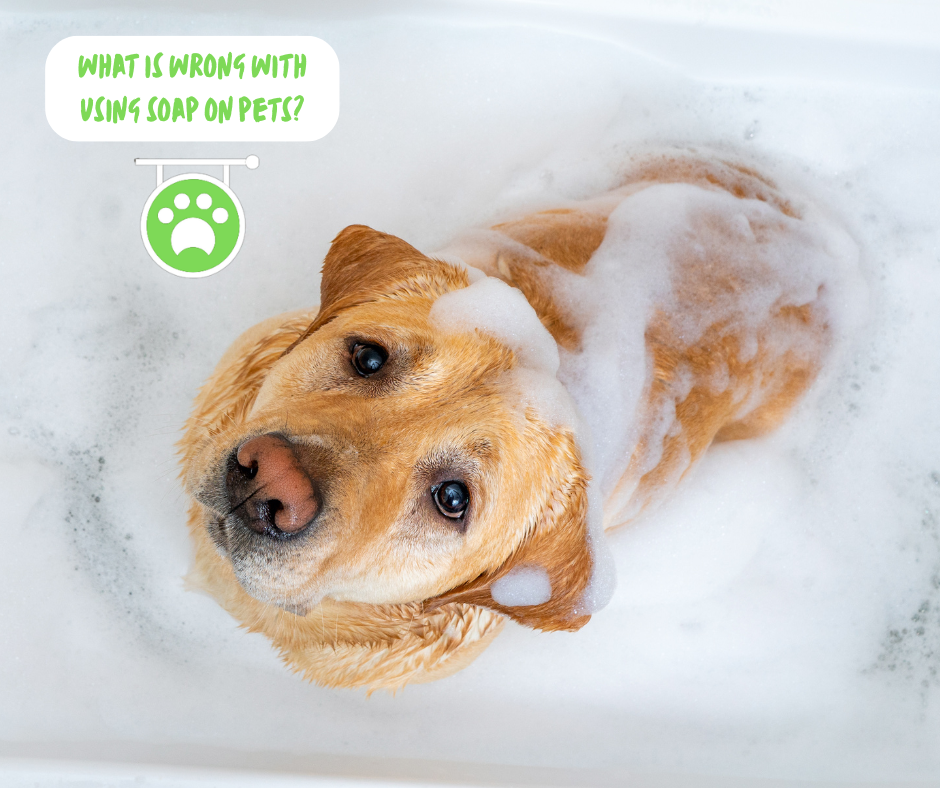
Everyone feels like they know what soap is- but do we really? I remember making soap in high school chemistry class. We had basically two ingredients. Sodium hydroxide, which was provided by the professor. And we got to pick an oil. I’m pretty sure I picked canola oil. And I made a liquid soap.
Can I geek out on a tiny bit of history for a minute? Originally, soap was made in an extinguished campfire. The ash from burned hardwood mixed with fat from food to make soap.
Now let’s geek out on a little bit of science: Soap is like a pair of handcuffs. One end handcuffs the soap to water. And the other end handcuffs to grease, oil and dirt. So when you use soap, it grabs the dirt on your dog’s body, or your hands, or your clothes, attaches to water and goes down the drain.
.
This is the story of soap. Simple. Basic. Effective. So why is a veterinarian giving you a lesson in soap? Because I think people are afraid of use soap on their pets! Recently, someone informed me that they had non-soap shampoo for their dog. And I was like…What?
So that’s why I’m telling you about soap.
One reasons people may be afraid of soap for pets is that veterinarians don’t make any money selling plain old soap- cause you can make soap. You can buy it dirt cheap. But if you go to the vet and you get something special and medicated that you leave on the skin for 15 minutes, but it isn’t soap, then they get to charge you $30!
And what’s in these special non-soap shampoos? Heavy duty disinfectants and antifungals (and dyes and perfumes) that have to stay on the skin for 10 minutes to work. Soap works in seconds.
Castile soap is made like I did it in chemistry class except it uses olive oil. Plain old soap. It’s safe and effective.
.
Still seeing patients in Tampa, Clearwater, and virtually.